


Landscape Design for Compact Spaces
For city-dwellers, outdoor living space is a precious commodity. For urban oases, especially in Boston and surrounding neighborhoods, space is at a premium. That hasn’t stopped landscape design, installation, and maintenance firm a Blade of Grass from transforming compact courtyards and terraces into lush, livable retreats that feel more expansive than they really are. Firm Sales Manager and ASLA Member Pete Cadieux shares his tricks of the trade for creative problem solving and refined design in compact outdoor living spaces.
“One of the exciting things about working in [compact] spaces is that every square inch is really valuable,” says Cadieux. “You’re really trying to maximize the impact you can make out of those spaces.”


Maximizing Outdoor Functionality
To make every square foot count, Cadieux often integrates multiple functions into a single design element. “In smaller spaces, you don’t have the luxury of unused areas,” Cadieux explains. “Everything has to have multiple purposes.”
In one Cambridge project, a Blade of Grass transformed a fence line into a custom storage feature topped with a green roof, disguising trash and recycling within a seamless, living structure. “It looks like an intentional part of the backyard but also hides away trash and recycling,” he says.

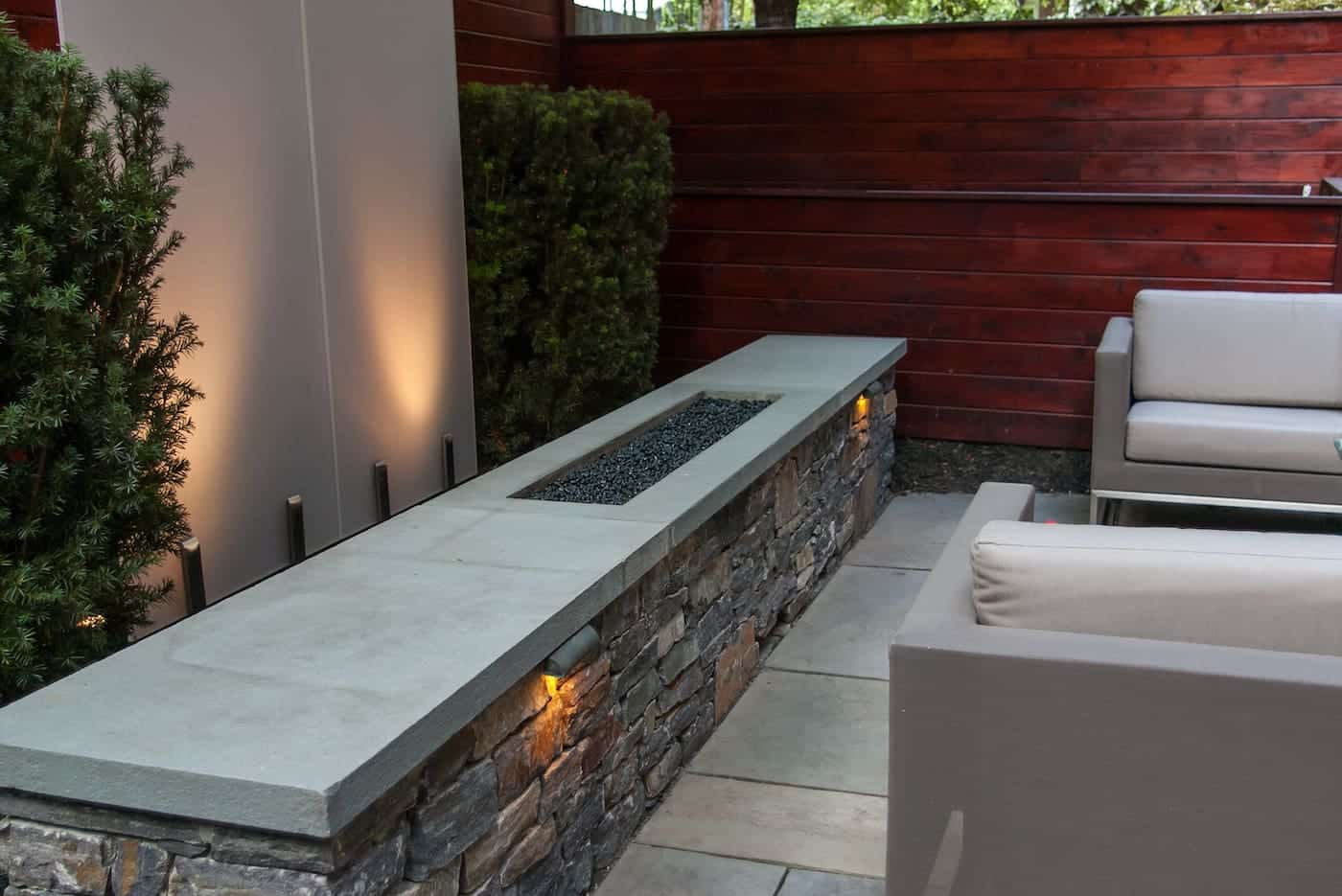
Another project in the South End combined a sitting wall and a rectangular fire feature, doubling as both seating and an eye-catching focal point.
Problem Solving in Compact Landscapes
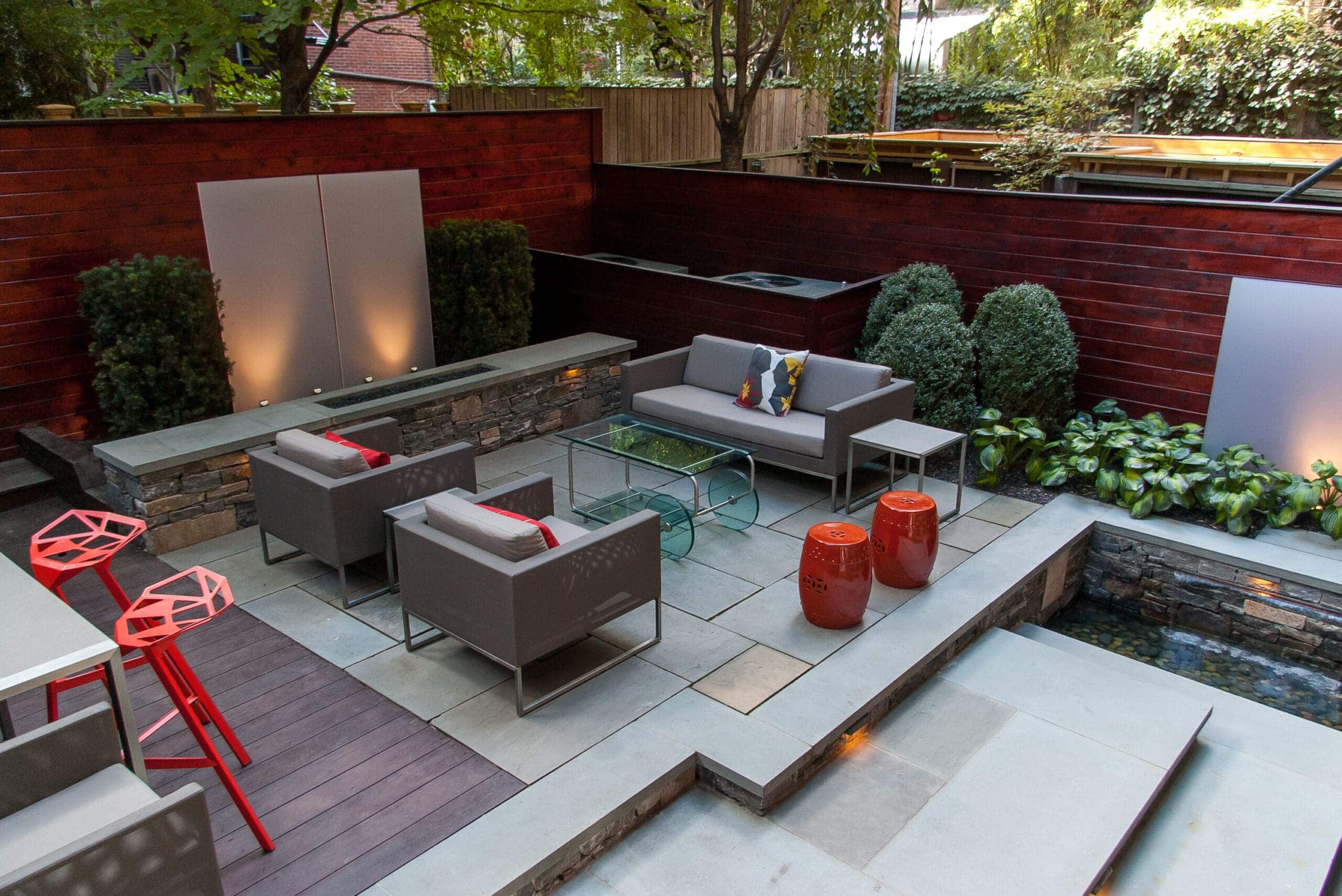
It is no secret that urban landscapes in the Boston area often come with logistical challenges, from narrow alleyways to century-old hardscapes that must be preserved. Cadieux recalls a South End project where every piece of material had to be hand-carried from the street. “We had to move all of the bluestone, water feature components, and stone walls by hand buckets through an alleyway,” he says.
On another project, the team had to shut down Montgomery street for a day to crane in materials and match sandstone that had been in place for over a century. While these complexities demand patience and ingenuity, they can also spark creativity.
Low-Maintenance, High-Impact Landscape Design
For most city homeowners, low maintenance is a top priority. Cadieux achieves lushness and texture through restraint, limiting plant varieties to create balance, harmony, and simplicity. “If you do too many varieties, it becomes busy and distracting,” he says. “We limit our plant palette to maybe even a single-digit number of varieties.”
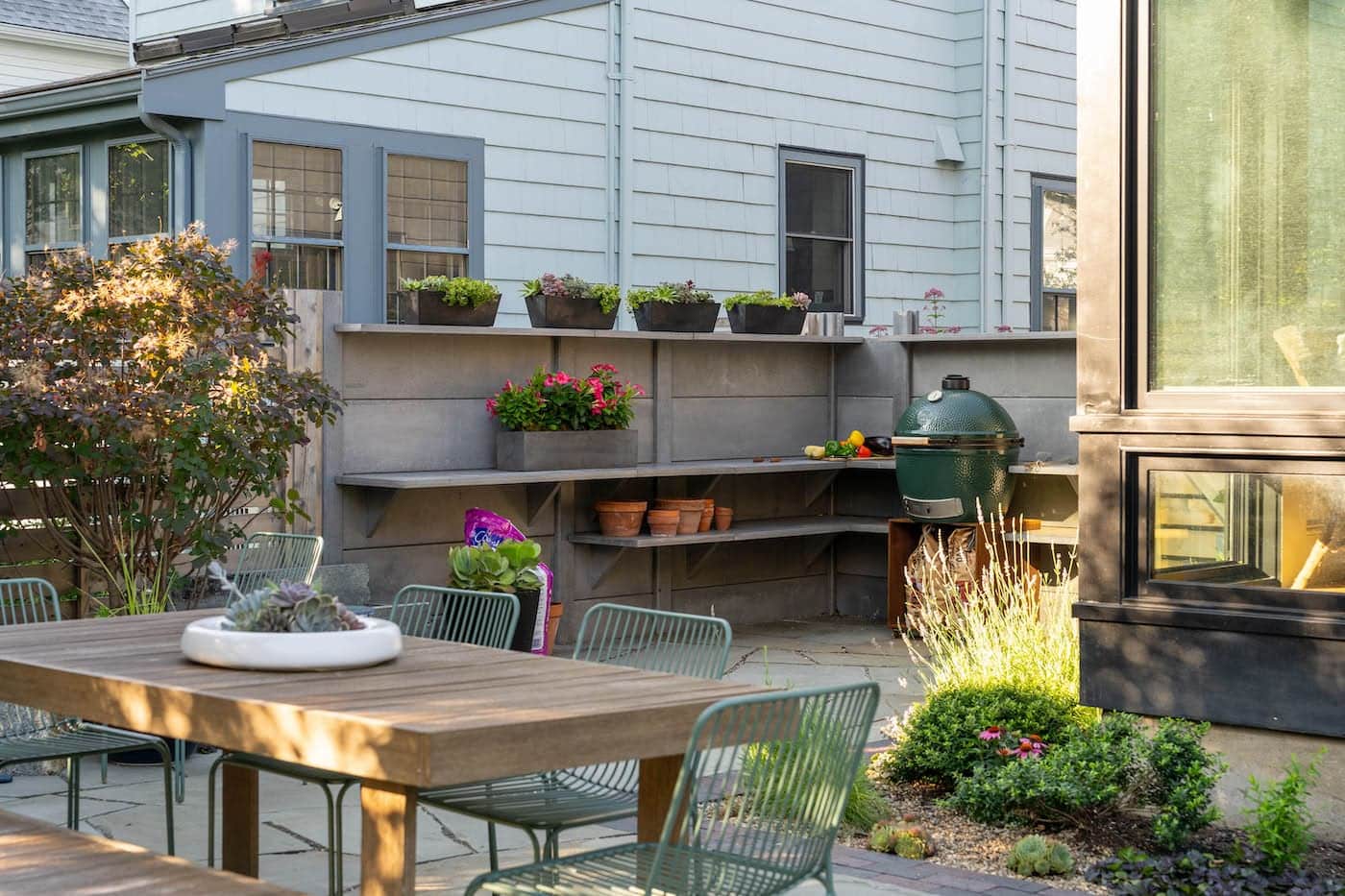
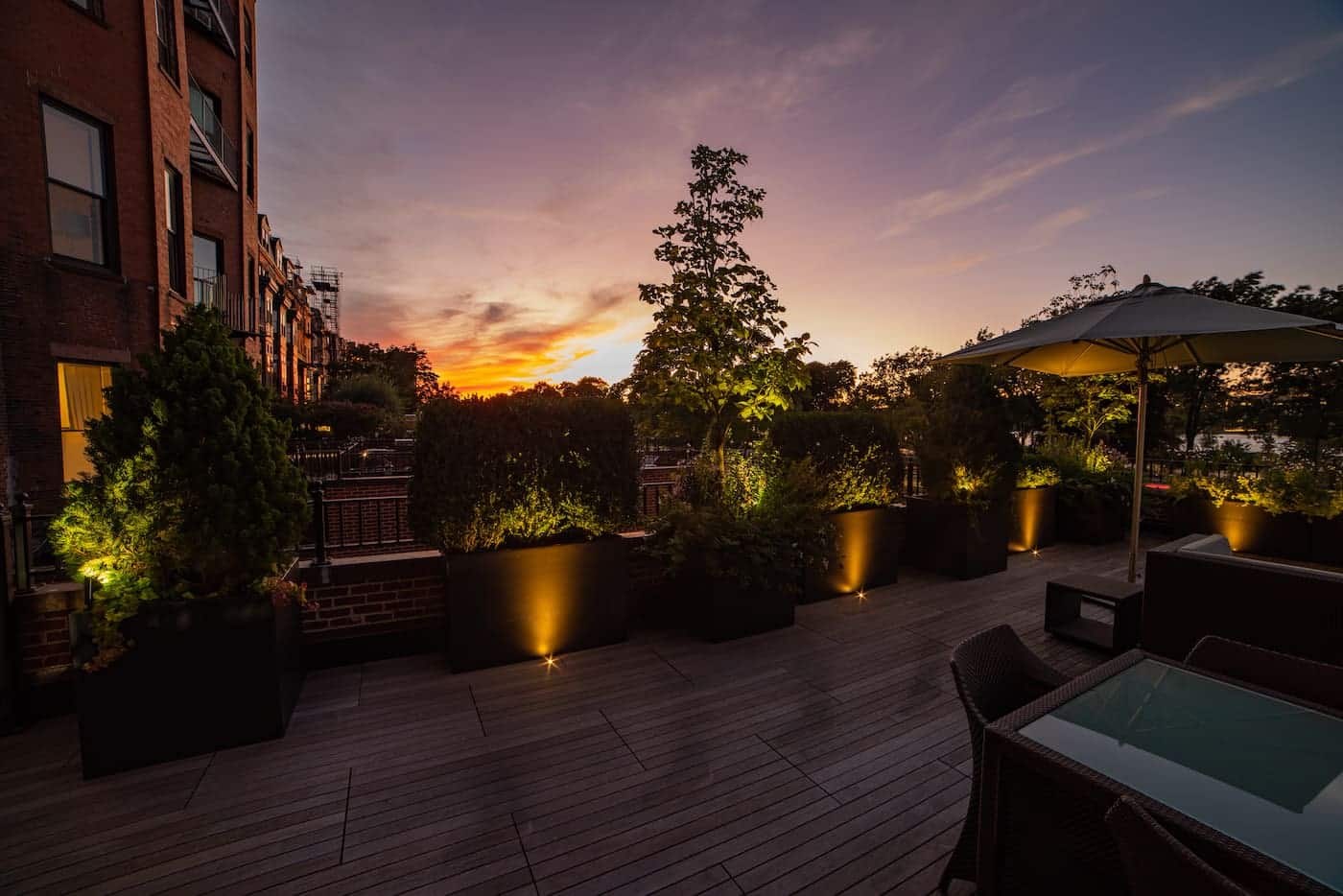
Shade-tolerant, durable species like boxwood, yew, and ornamental trees such as Japanese maples and kousa dogwoods are mainstays of urban landscapes. These “ironclad” selections thrive in tough city conditions while maintaining scale and proportion. Container plantings also play an essential role. They offer flexibility in rooftop gardens and courtyards where soil and access are limited. “Container plantings are really important in these small spaces,” Cadieux explains. “Sometimes it’s the only way you can get plant material into the space.”
Creating Enclosure and Atmosphere
While plant selection and layout are top priorities, many homeowners also seek a sense of privacy and intimacy. Cadieux often designs with both “walls” and “ceilings” in mind. “People really want a sense of enclosure,” he says. “Adding a couple of understory trees that grow to about 20 feet can create that overhead layer and make you feel more enclosed.”
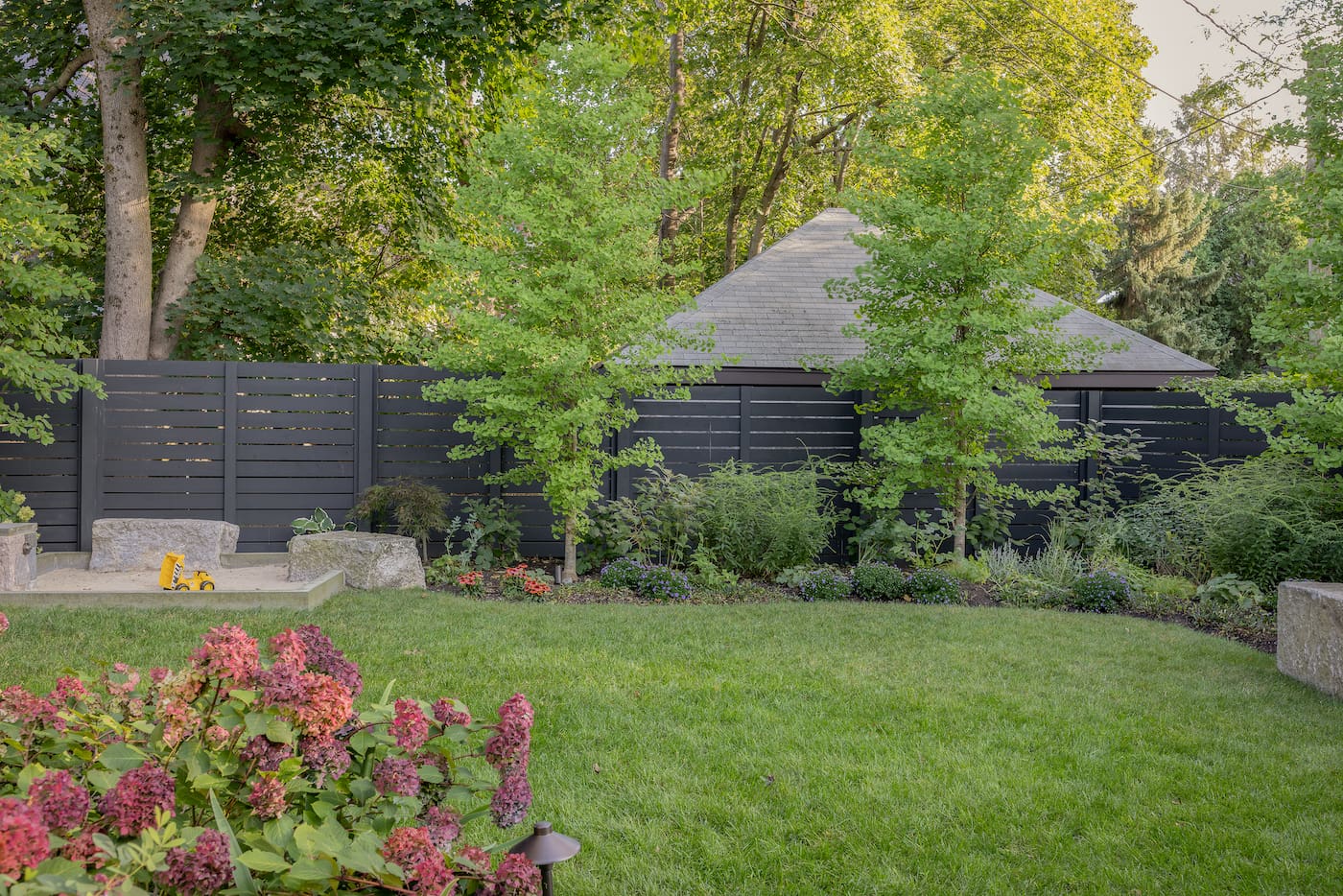
Lighting has become an essential design layer, one that can dramatically enhance functionality and feel. “Lighting gives you year-round usability and allows you to highlight areas of the space that are interesting and different,” says Cadieux. “It’s a low-cost, high-impact way to make a difference.”
Let Imagination Lead
Cadieux encourages homeowners not to see compact spaces as limiting but as opportunities for creativity. “Some people feel really limited by the space they have,” he notes. “My recommendation is to let your imagination take over and don’t feel constrained by the amount of space.” With careful planning, layered functionality, and design sensitivity, even the smallest city gardens can become lushly detailed and livable outdoor escapes.
Photography: Dan Kaplan, Michael J. Lee
